
In real estate, aesthetics alone won’t pay the bills. The true success of a project is measured by how functional those aesthetics are and how much cash flow (ROI) they generate for the investor. A common mistake we see in the market is forcing architectural projects into generic templates just to cut construction costs. In reality, professional architectural design and restoration determines much more than just the look of a building; it directly influences the buyer’s psychology and the property’s market value. At Fiza Global, with 10 years of field experience and a track record of managing 220,000 m² of projects, we stand by one clear fact: poor architectural design devalues even the best locations, while the right restoration can turn a neglected building into a gold mine. Don’t leave your property’s true potential to chance.
3. How does the architectural design process affect project costs?
High-quality architectural planning doesn’t increase construction costs; it actually prevents material waste on-site. Solving details during the drawing phase prevents the need for costly “break-and-fix” work during construction, leading to significant savings in the total budget.
Author’s Note:
Prepared by the Fiza Global Strategy Team, backed by 10 years of construction operations, 220,000 m² of project management, and a vision of “Success Engineering.”
Let’s Build New Beginnings Together!
Lotus Nişantaşı, Halaskargazi
Cd. 38-66, 34371 Şişli/İstanbul
© 2026 Fiza Global. All rights reserved.
-
- Net/Gross Square Meter Optimization: The main goal of design is to prevent waste. A good project minimizes circulation areas like corridors and stairwells to maximize the “Net” usable area that can be sold or leased.
-
- Integrating Cultural Texture with Modern Function: While staying true to historical details like stone, wood, and facade reliefs, we invisibly integrate smart home systems (IoT), underfloor heating, and modern insulation into the building’s infrastructure.
-
- Materials Engineering and Depreciation: Materials should be more than just stylish; they need to be durable with low operating costs. In hotel designs, for example, choosing acoustic insulation and wear-resistant flooring lowers long-term maintenance (CAPEX) costs.
-
- Environmental Sustainability (LEED/BREEAM):
Future real estate projects rely on energy efficiency. Details like maximizing natural light, solar energy integration, and rainwater harvesting ensure the building meets global standards like LEED.
- Environmental Sustainability (LEED/BREEAM):
-
- Permitting and Legal Compliance: A project that looks perfect on paper isn’t enough. It must be 100% compliant with local zoning regulations, floor area ratios (TAKS/KAKS), and fire/earthquake safety codes to secure the necessary permits.
The Board of Monuments and Historical Heritage Law
In metropolises like Istanbul, transforming registered heritage sites such as mansions, waterfront villas, or historical inns involves strict bureaucratic rules. Survey, restitution, and restoration projects must be approved down to the millimeter by the Regional Boards for the Protection of Cultural Assets (Board of Monuments). A single wrong move or unauthorized intervention can lead to heavy fines and the sealing of the building.
The Fiza Global Manifesto: We Don’t Just Watch the Process, We Build the System
Let’s move past the talk and get to work. Your property is too valuable to be wasted on amateur drawings or visionless renovations. At Fiza Global, we don’t just make buildings look better; we transform them into assets that mathematically generate cash and psychologically impact the target audience.
Whether it’s a luxury villa or a historical commercial building, check out our Architectural Design and Restoration page to reveal the true potential of your space and maximize your ROI. You can sit down with us directly to discuss our design strategies. Let’s build new beginnings together!
Frequently Asked Questions (FAQ)
1. What are survey, restitution, and restoration projects?
A survey is a precise, millimeter-accurate drawing of the building’s current state. Restitution is determining the original state of the building through archival documents. A restoration project is the design of how the building will be adapted to modern conditions while staying true to the original.
2. Can the interior of a historical building be designed in a modern way?
Yes. Protection boards generally require the preservation of the exterior facade, the structural system, and original decorations like frescoes or ceiling work. However, the interior partitions, bathrooms, and technological infrastructure can be redesigned for modern needs within the approved project.
3. How does the architectural design process affect project costs?
High-quality architectural planning doesn’t increase construction costs; it actually prevents material waste on-site. Solving details during the drawing phase prevents the need for costly “break-and-fix” work during construction, leading to significant savings in the total budget.
Author’s Note:
Prepared by the Fiza Global Strategy Team, backed by 10 years of construction operations, 220,000 m² of project management, and a vision of “Success Engineering.”[/vc_column_text][/vc_column][/vc_row]
Let’s Build New Beginnings Together!
Lotus Nişantaşı, Halaskargazi
Cd. 38-66, 34371 Şişli/İstanbul
© 2026 Fiza Global. All rights reserved.
-
- Net/Gross Square Meter Optimization: The main goal of design is to prevent waste. A good project minimizes circulation areas like corridors and stairwells to maximize the “Net” usable area that can be sold or leased.
-
- Integrating Cultural Texture with Modern Function: While staying true to historical details like stone, wood, and facade reliefs, we invisibly integrate smart home systems (IoT), underfloor heating, and modern insulation into the building’s infrastructure.
-
- Materials Engineering and Depreciation: Materials should be more than just stylish; they need to be durable with low operating costs. In hotel designs, for example, choosing acoustic insulation and wear-resistant flooring lowers long-term maintenance (CAPEX) costs.
-
- Environmental Sustainability (LEED/BREEAM):
Future real estate projects rely on energy efficiency. Details like maximizing natural light, solar energy integration, and rainwater harvesting ensure the building meets global standards like LEED.
- Environmental Sustainability (LEED/BREEAM):
-
- Permitting and Legal Compliance: A project that looks perfect on paper isn’t enough. It must be 100% compliant with local zoning regulations, floor area ratios (TAKS/KAKS), and fire/earthquake safety codes to secure the necessary permits.
The Board of Monuments and Historical Heritage Law
In metropolises like Istanbul, transforming registered heritage sites such as mansions, waterfront villas, or historical inns involves strict bureaucratic rules. Survey, restitution, and restoration projects must be approved down to the millimeter by the Regional Boards for the Protection of Cultural Assets (Board of Monuments). A single wrong move or unauthorized intervention can lead to heavy fines and the sealing of the building.
The Fiza Global Manifesto: We Don’t Just Watch the Process, We Build the System
Let’s move past the talk and get to work. Your property is too valuable to be wasted on amateur drawings or visionless renovations. At Fiza Global, we don’t just make buildings look better; we transform them into assets that mathematically generate cash and psychologically impact the target audience.
Whether it’s a luxury villa or a historical commercial building, check out our Architectural Design and Restoration page to reveal the true potential of your space and maximize your ROI. You can sit down with us directly to discuss our design strategies. Let’s build new beginnings together!
Frequently Asked Questions (FAQ)
1. What are survey, restitution, and restoration projects?
A survey is a precise, millimeter-accurate drawing of the building’s current state. Restitution is determining the original state of the building through archival documents. A restoration project is the design of how the building will be adapted to modern conditions while staying true to the original.
2. Can the interior of a historical building be designed in a modern way?
Yes. Protection boards generally require the preservation of the exterior facade, the structural system, and original decorations like frescoes or ceiling work. However, the interior partitions, bathrooms, and technological infrastructure can be redesigned for modern needs within the approved project.
3. How does the architectural design process affect project costs?
High-quality architectural planning doesn’t increase construction costs; it actually prevents material waste on-site. Solving details during the drawing phase prevents the need for costly “break-and-fix” work during construction, leading to significant savings in the total budget.
Author’s Note:
Prepared by the Fiza Global Strategy Team, backed by 10 years of construction operations, 220,000 m² of project management, and a vision of “Success Engineering.”[/vc_column_text][/vc_column][/vc_row]
Let’s Build New Beginnings Together!
Lotus Nişantaşı, Halaskargazi
Cd. 38-66, 34371 Şişli/İstanbul
© 2026 Fiza Global. All rights reserved.
To maximize property value, here are the five analysis steps that must be applied without compromise both at the drawing board and on-site:
-
- Net/Gross Square Meter Optimization: The main goal of design is to prevent waste. A good project minimizes circulation areas like corridors and stairwells to maximize the “Net” usable area that can be sold or leased.
-
- Integrating Cultural Texture with Modern Function: While staying true to historical details like stone, wood, and facade reliefs, we invisibly integrate smart home systems (IoT), underfloor heating, and modern insulation into the building’s infrastructure.
-
- Materials Engineering and Depreciation: Materials should be more than just stylish; they need to be durable with low operating costs. In hotel designs, for example, choosing acoustic insulation and wear-resistant flooring lowers long-term maintenance (CAPEX) costs.
-
- Environmental Sustainability (LEED/BREEAM):
Future real estate projects rely on energy efficiency. Details like maximizing natural light, solar energy integration, and rainwater harvesting ensure the building meets global standards like LEED.
- Environmental Sustainability (LEED/BREEAM):
-
- Permitting and Legal Compliance: A project that looks perfect on paper isn’t enough. It must be 100% compliant with local zoning regulations, floor area ratios (TAKS/KAKS), and fire/earthquake safety codes to secure the necessary permits.
The Board of Monuments and Historical Heritage Law
In metropolises like Istanbul, transforming registered heritage sites such as mansions, waterfront villas, or historical inns involves strict bureaucratic rules. Survey, restitution, and restoration projects must be approved down to the millimeter by the Regional Boards for the Protection of Cultural Assets (Board of Monuments). A single wrong move or unauthorized intervention can lead to heavy fines and the sealing of the building.
The Fiza Global Manifesto: We Don’t Just Watch the Process, We Build the System
Let’s move past the talk and get to work. Your property is too valuable to be wasted on amateur drawings or visionless renovations. At Fiza Global, we don’t just make buildings look better; we transform them into assets that mathematically generate cash and psychologically impact the target audience.
Whether it’s a luxury villa or a historical commercial building, check out our Architectural Design and Restoration page to reveal the true potential of your space and maximize your ROI. You can sit down with us directly to discuss our design strategies. Let’s build new beginnings together!
Frequently Asked Questions (FAQ)
1. What are survey, restitution, and restoration projects?
A survey is a precise, millimeter-accurate drawing of the building’s current state. Restitution is determining the original state of the building through archival documents. A restoration project is the design of how the building will be adapted to modern conditions while staying true to the original.
2. Can the interior of a historical building be designed in a modern way?
Yes. Protection boards generally require the preservation of the exterior facade, the structural system, and original decorations like frescoes or ceiling work. However, the interior partitions, bathrooms, and technological infrastructure can be redesigned for modern needs within the approved project.
3. How does the architectural design process affect project costs?
High-quality architectural planning doesn’t increase construction costs; it actually prevents material waste on-site. Solving details during the drawing phase prevents the need for costly “break-and-fix” work during construction, leading to significant savings in the total budget.
Author’s Note:
Prepared by the Fiza Global Strategy Team, backed by 10 years of construction operations, 220,000 m² of project management, and a vision of “Success Engineering.”[/vc_column_text][/vc_column][/vc_row]
Let’s Build New Beginnings Together!
Lotus Nişantaşı, Halaskargazi
Cd. 38-66, 34371 Şişli/İstanbul
© 2026 Fiza Global. All rights reserved.
When it comes to heritage sites and historical buildings, architectural design and restoration is not just a standard renovation. When these structures blend the soul of the past with the comfort of modern technology, they transform into Class A commercial properties or ultra-luxury boutique hotels. This allows them to generate rental and sales income that is often three times higher than the market average.
5 Strategic Steps for Flawless Architectural Design and Restoration
To maximize property value, here are the five analysis steps that must be applied without compromise both at the drawing board and on-site:
-
- Net/Gross Square Meter Optimization: The main goal of design is to prevent waste. A good project minimizes circulation areas like corridors and stairwells to maximize the “Net” usable area that can be sold or leased.
-
- Integrating Cultural Texture with Modern Function: While staying true to historical details like stone, wood, and facade reliefs, we invisibly integrate smart home systems (IoT), underfloor heating, and modern insulation into the building’s infrastructure.
-
- Materials Engineering and Depreciation: Materials should be more than just stylish; they need to be durable with low operating costs. In hotel designs, for example, choosing acoustic insulation and wear-resistant flooring lowers long-term maintenance (CAPEX) costs.
-
- Environmental Sustainability (LEED/BREEAM):
Future real estate projects rely on energy efficiency. Details like maximizing natural light, solar energy integration, and rainwater harvesting ensure the building meets global standards like LEED.
- Environmental Sustainability (LEED/BREEAM):
-
- Permitting and Legal Compliance: A project that looks perfect on paper isn’t enough. It must be 100% compliant with local zoning regulations, floor area ratios (TAKS/KAKS), and fire/earthquake safety codes to secure the necessary permits.
The Board of Monuments and Historical Heritage Law
In metropolises like Istanbul, transforming registered heritage sites such as mansions, waterfront villas, or historical inns involves strict bureaucratic rules. Survey, restitution, and restoration projects must be approved down to the millimeter by the Regional Boards for the Protection of Cultural Assets (Board of Monuments). A single wrong move or unauthorized intervention can lead to heavy fines and the sealing of the building.
The Fiza Global Manifesto: We Don’t Just Watch the Process, We Build the System
Let’s move past the talk and get to work. Your property is too valuable to be wasted on amateur drawings or visionless renovations. At Fiza Global, we don’t just make buildings look better; we transform them into assets that mathematically generate cash and psychologically impact the target audience.
Whether it’s a luxury villa or a historical commercial building, check out our Architectural Design and Restoration page to reveal the true potential of your space and maximize your ROI. You can sit down with us directly to discuss our design strategies. Let’s build new beginnings together!
Frequently Asked Questions (FAQ)
1. What are survey, restitution, and restoration projects?
A survey is a precise, millimeter-accurate drawing of the building’s current state. Restitution is determining the original state of the building through archival documents. A restoration project is the design of how the building will be adapted to modern conditions while staying true to the original.
2. Can the interior of a historical building be designed in a modern way?
Yes. Protection boards generally require the preservation of the exterior facade, the structural system, and original decorations like frescoes or ceiling work. However, the interior partitions, bathrooms, and technological infrastructure can be redesigned for modern needs within the approved project.
3. How does the architectural design process affect project costs?
High-quality architectural planning doesn’t increase construction costs; it actually prevents material waste on-site. Solving details during the drawing phase prevents the need for costly “break-and-fix” work during construction, leading to significant savings in the total budget.
Author’s Note:
Prepared by the Fiza Global Strategy Team, backed by 10 years of construction operations, 220,000 m² of project management, and a vision of “Success Engineering.”[/vc_column_text][/vc_column][/vc_row]
Let’s Build New Beginnings Together!
Lotus Nişantaşı, Halaskargazi
Cd. 38-66, 34371 Şişli/İstanbul
© 2026 Fiza Global. All rights reserved.
-
- The Board of Monuments and Historical Heritage Law
-
- The Fiza Global Manifesto: We Don’t Just Watch the Process, We Build the System
-
- Frequently Asked Questions (FAQ)
Why Strategic Architectural Design and Restoration Is Essential
Modern real estate investors and luxury home buyers aren’t just looking for four walls anymore. They are buying a lifestyle, energy efficiency, and a spatial experience. Using smart engineering to reclaim dead zones like long hallways or useless alcoves increases the sellable net square footage. This leads directly to higher revenue.
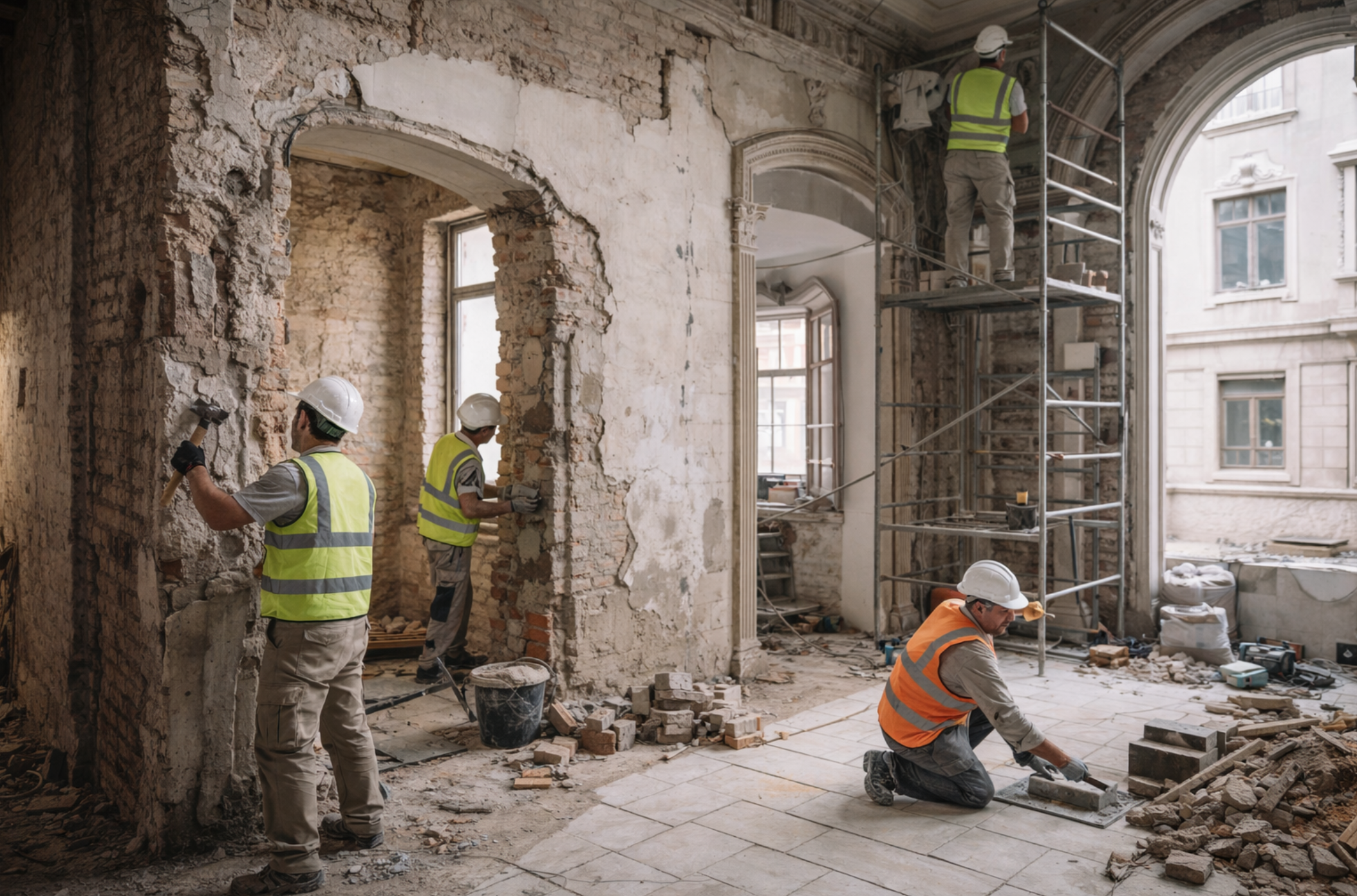
When it comes to heritage sites and historical buildings, architectural design and restoration is not just a standard renovation. When these structures blend the soul of the past with the comfort of modern technology, they transform into Class A commercial properties or ultra-luxury boutique hotels. This allows them to generate rental and sales income that is often three times higher than the market average.
5 Strategic Steps for Flawless Architectural Design and Restoration
To maximize property value, here are the five analysis steps that must be applied without compromise both at the drawing board and on-site:
-
- Net/Gross Square Meter Optimization: The main goal of design is to prevent waste. A good project minimizes circulation areas like corridors and stairwells to maximize the “Net” usable area that can be sold or leased.
-
- Integrating Cultural Texture with Modern Function: While staying true to historical details like stone, wood, and facade reliefs, we invisibly integrate smart home systems (IoT), underfloor heating, and modern insulation into the building’s infrastructure.
-
- Materials Engineering and Depreciation: Materials should be more than just stylish; they need to be durable with low operating costs. In hotel designs, for example, choosing acoustic insulation and wear-resistant flooring lowers long-term maintenance (CAPEX) costs.
-
- Environmental Sustainability (LEED/BREEAM):
Future real estate projects rely on energy efficiency. Details like maximizing natural light, solar energy integration, and rainwater harvesting ensure the building meets global standards like LEED.
- Environmental Sustainability (LEED/BREEAM):
-
- Permitting and Legal Compliance: A project that looks perfect on paper isn’t enough. It must be 100% compliant with local zoning regulations, floor area ratios (TAKS/KAKS), and fire/earthquake safety codes to secure the necessary permits.
The Board of Monuments and Historical Heritage Law
In metropolises like Istanbul, transforming registered heritage sites such as mansions, waterfront villas, or historical inns involves strict bureaucratic rules. Survey, restitution, and restoration projects must be approved down to the millimeter by the Regional Boards for the Protection of Cultural Assets (Board of Monuments). A single wrong move or unauthorized intervention can lead to heavy fines and the sealing of the building.
The Fiza Global Manifesto: We Don’t Just Watch the Process, We Build the System
Let’s move past the talk and get to work. Your property is too valuable to be wasted on amateur drawings or visionless renovations. At Fiza Global, we don’t just make buildings look better; we transform them into assets that mathematically generate cash and psychologically impact the target audience.
Whether it’s a luxury villa or a historical commercial building, check out our Architectural Design and Restoration page to reveal the true potential of your space and maximize your ROI. You can sit down with us directly to discuss our design strategies. Let’s build new beginnings together!
Frequently Asked Questions (FAQ)
1. What are survey, restitution, and restoration projects?
A survey is a precise, millimeter-accurate drawing of the building’s current state. Restitution is determining the original state of the building through archival documents. A restoration project is the design of how the building will be adapted to modern conditions while staying true to the original.
2. Can the interior of a historical building be designed in a modern way?
Yes. Protection boards generally require the preservation of the exterior facade, the structural system, and original decorations like frescoes or ceiling work. However, the interior partitions, bathrooms, and technological infrastructure can be redesigned for modern needs within the approved project.
3. How does the architectural design process affect project costs?
High-quality architectural planning doesn’t increase construction costs; it actually prevents material waste on-site. Solving details during the drawing phase prevents the need for costly “break-and-fix” work during construction, leading to significant savings in the total budget.
Author’s Note:
Prepared by the Fiza Global Strategy Team, backed by 10 years of construction operations, 220,000 m² of project management, and a vision of “Success Engineering.”[/vc_column_text][/vc_column][/vc_row]
Let’s Build New Beginnings Together!
Lotus Nişantaşı, Halaskargazi
Cd. 38-66, 34371 Şişli/İstanbul
© 2026 Fiza Global. All rights reserved.
-
- 5 Strategic Steps for Flawless Architectural Design and Restoration
-
- The Board of Monuments and Historical Heritage Law
-
- The Fiza Global Manifesto: We Don’t Just Watch the Process, We Build the System
-
- Frequently Asked Questions (FAQ)
Why Strategic Architectural Design and Restoration Is Essential
Modern real estate investors and luxury home buyers aren’t just looking for four walls anymore. They are buying a lifestyle, energy efficiency, and a spatial experience. Using smart engineering to reclaim dead zones like long hallways or useless alcoves increases the sellable net square footage. This leads directly to higher revenue.
When it comes to heritage sites and historical buildings, architectural design and restoration is not just a standard renovation. When these structures blend the soul of the past with the comfort of modern technology, they transform into Class A commercial properties or ultra-luxury boutique hotels. This allows them to generate rental and sales income that is often three times higher than the market average.
5 Strategic Steps for Flawless Architectural Design and Restoration
To maximize property value, here are the five analysis steps that must be applied without compromise both at the drawing board and on-site:
-
- Net/Gross Square Meter Optimization: The main goal of design is to prevent waste. A good project minimizes circulation areas like corridors and stairwells to maximize the “Net” usable area that can be sold or leased.
-
- Integrating Cultural Texture with Modern Function: While staying true to historical details like stone, wood, and facade reliefs, we invisibly integrate smart home systems (IoT), underfloor heating, and modern insulation into the building’s infrastructure.
-
- Materials Engineering and Depreciation: Materials should be more than just stylish; they need to be durable with low operating costs. In hotel designs, for example, choosing acoustic insulation and wear-resistant flooring lowers long-term maintenance (CAPEX) costs.
-
- Environmental Sustainability (LEED/BREEAM):
Future real estate projects rely on energy efficiency. Details like maximizing natural light, solar energy integration, and rainwater harvesting ensure the building meets global standards like LEED.
- Environmental Sustainability (LEED/BREEAM):
-
- Permitting and Legal Compliance: A project that looks perfect on paper isn’t enough. It must be 100% compliant with local zoning regulations, floor area ratios (TAKS/KAKS), and fire/earthquake safety codes to secure the necessary permits.
The Board of Monuments and Historical Heritage Law
In metropolises like Istanbul, transforming registered heritage sites such as mansions, waterfront villas, or historical inns involves strict bureaucratic rules. Survey, restitution, and restoration projects must be approved down to the millimeter by the Regional Boards for the Protection of Cultural Assets (Board of Monuments). A single wrong move or unauthorized intervention can lead to heavy fines and the sealing of the building.
The Fiza Global Manifesto: We Don’t Just Watch the Process, We Build the System
Let’s move past the talk and get to work. Your property is too valuable to be wasted on amateur drawings or visionless renovations. At Fiza Global, we don’t just make buildings look better; we transform them into assets that mathematically generate cash and psychologically impact the target audience.
Whether it’s a luxury villa or a historical commercial building, check out our Architectural Design and Restoration page to reveal the true potential of your space and maximize your ROI. You can sit down with us directly to discuss our design strategies. Let’s build new beginnings together!
Frequently Asked Questions (FAQ)
1. What are survey, restitution, and restoration projects?
A survey is a precise, millimeter-accurate drawing of the building’s current state. Restitution is determining the original state of the building through archival documents. A restoration project is the design of how the building will be adapted to modern conditions while staying true to the original.
2. Can the interior of a historical building be designed in a modern way?
Yes. Protection boards generally require the preservation of the exterior facade, the structural system, and original decorations like frescoes or ceiling work. However, the interior partitions, bathrooms, and technological infrastructure can be redesigned for modern needs within the approved project.
3. How does the architectural design process affect project costs?
High-quality architectural planning doesn’t increase construction costs; it actually prevents material waste on-site. Solving details during the drawing phase prevents the need for costly “break-and-fix” work during construction, leading to significant savings in the total budget.
Author’s Note:
Prepared by the Fiza Global Strategy Team, backed by 10 years of construction operations, 220,000 m² of project management, and a vision of “Success Engineering.”[/vc_column_text][/vc_column][/vc_row]
Let’s Build New Beginnings Together!
Lotus Nişantaşı, Halaskargazi
Cd. 38-66, 34371 Şişli/İstanbul
© 2026 Fiza Global. All rights reserved.
-
- 5 Strategic Steps for Flawless Architectural Design and Restoration
-
- The Board of Monuments and Historical Heritage Law
-
- The Fiza Global Manifesto: We Don’t Just Watch the Process, We Build the System
-
- Frequently Asked Questions (FAQ)
Why Strategic Architectural Design and Restoration Is Essential
Modern real estate investors and luxury home buyers aren’t just looking for four walls anymore. They are buying a lifestyle, energy efficiency, and a spatial experience. Using smart engineering to reclaim dead zones like long hallways or useless alcoves increases the sellable net square footage. This leads directly to higher revenue.
When it comes to heritage sites and historical buildings, architectural design and restoration is not just a standard renovation. When these structures blend the soul of the past with the comfort of modern technology, they transform into Class A commercial properties or ultra-luxury boutique hotels. This allows them to generate rental and sales income that is often three times higher than the market average.
5 Strategic Steps for Flawless Architectural Design and Restoration
To maximize property value, here are the five analysis steps that must be applied without compromise both at the drawing board and on-site:
-
- Net/Gross Square Meter Optimization: The main goal of design is to prevent waste. A good project minimizes circulation areas like corridors and stairwells to maximize the “Net” usable area that can be sold or leased.
-
- Integrating Cultural Texture with Modern Function: While staying true to historical details like stone, wood, and facade reliefs, we invisibly integrate smart home systems (IoT), underfloor heating, and modern insulation into the building’s infrastructure.
-
- Materials Engineering and Depreciation: Materials should be more than just stylish; they need to be durable with low operating costs. In hotel designs, for example, choosing acoustic insulation and wear-resistant flooring lowers long-term maintenance (CAPEX) costs.
-
- Environmental Sustainability (LEED/BREEAM):
Future real estate projects rely on energy efficiency. Details like maximizing natural light, solar energy integration, and rainwater harvesting ensure the building meets global standards like LEED.
- Environmental Sustainability (LEED/BREEAM):
-
- Permitting and Legal Compliance: A project that looks perfect on paper isn’t enough. It must be 100% compliant with local zoning regulations, floor area ratios (TAKS/KAKS), and fire/earthquake safety codes to secure the necessary permits.
The Board of Monuments and Historical Heritage Law
In metropolises like Istanbul, transforming registered heritage sites such as mansions, waterfront villas, or historical inns involves strict bureaucratic rules. Survey, restitution, and restoration projects must be approved down to the millimeter by the Regional Boards for the Protection of Cultural Assets (Board of Monuments). A single wrong move or unauthorized intervention can lead to heavy fines and the sealing of the building.
The Fiza Global Manifesto: We Don’t Just Watch the Process, We Build the System
Let’s move past the talk and get to work. Your property is too valuable to be wasted on amateur drawings or visionless renovations. At Fiza Global, we don’t just make buildings look better; we transform them into assets that mathematically generate cash and psychologically impact the target audience.
Whether it’s a luxury villa or a historical commercial building, check out our Architectural Design and Restoration page to reveal the true potential of your space and maximize your ROI. You can sit down with us directly to discuss our design strategies. Let’s build new beginnings together!
Frequently Asked Questions (FAQ)
1. What are survey, restitution, and restoration projects?
A survey is a precise, millimeter-accurate drawing of the building’s current state. Restitution is determining the original state of the building through archival documents. A restoration project is the design of how the building will be adapted to modern conditions while staying true to the original.
2. Can the interior of a historical building be designed in a modern way?
Yes. Protection boards generally require the preservation of the exterior facade, the structural system, and original decorations like frescoes or ceiling work. However, the interior partitions, bathrooms, and technological infrastructure can be redesigned for modern needs within the approved project.
3. How does the architectural design process affect project costs?
High-quality architectural planning doesn’t increase construction costs; it actually prevents material waste on-site. Solving details during the drawing phase prevents the need for costly “break-and-fix” work during construction, leading to significant savings in the total budget.
Author’s Note:
Prepared by the Fiza Global Strategy Team, backed by 10 years of construction operations, 220,000 m² of project management, and a vision of “Success Engineering.”[/vc_column_text][/vc_column][/vc_row]
Let’s Build New Beginnings Together!
Lotus Nişantaşı, Halaskargazi
Cd. 38-66, 34371 Şişli/İstanbul
© 2026 Fiza Global. All rights reserved.
-
- Why Strategic Architectural Design and Restoration Is Essential
-
- 5 Strategic Steps for Flawless Architectural Design and Restoration
-
- The Board of Monuments and Historical Heritage Law
-
- The Fiza Global Manifesto: We Don’t Just Watch the Process, We Build the System
-
- Frequently Asked Questions (FAQ)
Why Strategic Architectural Design and Restoration Is Essential
Modern real estate investors and luxury home buyers aren’t just looking for four walls anymore. They are buying a lifestyle, energy efficiency, and a spatial experience. Using smart engineering to reclaim dead zones like long hallways or useless alcoves increases the sellable net square footage. This leads directly to higher revenue.
When it comes to heritage sites and historical buildings, architectural design and restoration is not just a standard renovation. When these structures blend the soul of the past with the comfort of modern technology, they transform into Class A commercial properties or ultra-luxury boutique hotels. This allows them to generate rental and sales income that is often three times higher than the market average.
5 Strategic Steps for Flawless Architectural Design and Restoration
To maximize property value, here are the five analysis steps that must be applied without compromise both at the drawing board and on-site:
-
- Net/Gross Square Meter Optimization: The main goal of design is to prevent waste. A good project minimizes circulation areas like corridors and stairwells to maximize the “Net” usable area that can be sold or leased.
-
- Integrating Cultural Texture with Modern Function: While staying true to historical details like stone, wood, and facade reliefs, we invisibly integrate smart home systems (IoT), underfloor heating, and modern insulation into the building’s infrastructure.
-
- Materials Engineering and Depreciation: Materials should be more than just stylish; they need to be durable with low operating costs. In hotel designs, for example, choosing acoustic insulation and wear-resistant flooring lowers long-term maintenance (CAPEX) costs.
-
- Environmental Sustainability (LEED/BREEAM):
Future real estate projects rely on energy efficiency. Details like maximizing natural light, solar energy integration, and rainwater harvesting ensure the building meets global standards like LEED.
- Environmental Sustainability (LEED/BREEAM):
-
- Permitting and Legal Compliance: A project that looks perfect on paper isn’t enough. It must be 100% compliant with local zoning regulations, floor area ratios (TAKS/KAKS), and fire/earthquake safety codes to secure the necessary permits.
The Board of Monuments and Historical Heritage Law
In metropolises like Istanbul, transforming registered heritage sites such as mansions, waterfront villas, or historical inns involves strict bureaucratic rules. Survey, restitution, and restoration projects must be approved down to the millimeter by the Regional Boards for the Protection of Cultural Assets (Board of Monuments). A single wrong move or unauthorized intervention can lead to heavy fines and the sealing of the building.
The Fiza Global Manifesto: We Don’t Just Watch the Process, We Build the System
Let’s move past the talk and get to work. Your property is too valuable to be wasted on amateur drawings or visionless renovations. At Fiza Global, we don’t just make buildings look better; we transform them into assets that mathematically generate cash and psychologically impact the target audience.
Whether it’s a luxury villa or a historical commercial building, check out our Architectural Design and Restoration page to reveal the true potential of your space and maximize your ROI. You can sit down with us directly to discuss our design strategies. Let’s build new beginnings together!
Frequently Asked Questions (FAQ)
1. What are survey, restitution, and restoration projects?
A survey is a precise, millimeter-accurate drawing of the building’s current state. Restitution is determining the original state of the building through archival documents. A restoration project is the design of how the building will be adapted to modern conditions while staying true to the original.
2. Can the interior of a historical building be designed in a modern way?
Yes. Protection boards generally require the preservation of the exterior facade, the structural system, and original decorations like frescoes or ceiling work. However, the interior partitions, bathrooms, and technological infrastructure can be redesigned for modern needs within the approved project.
3. How does the architectural design process affect project costs?
High-quality architectural planning doesn’t increase construction costs; it actually prevents material waste on-site. Solving details during the drawing phase prevents the need for costly “break-and-fix” work during construction, leading to significant savings in the total budget.
Author’s Note:
Prepared by the Fiza Global Strategy Team, backed by 10 years of construction operations, 220,000 m² of project management, and a vision of “Success Engineering.”[/vc_column_text][/vc_column][/vc_row]
Let’s Build New Beginnings Together!
Lotus Nişantaşı, Halaskargazi
Cd. 38-66, 34371 Şişli/İstanbul
© 2026 Fiza Global. All rights reserved.
-
- Why Strategic Architectural Design and Restoration Is Essential
-
- 5 Strategic Steps for Flawless Architectural Design and Restoration
-
- The Board of Monuments and Historical Heritage Law
-
- The Fiza Global Manifesto: We Don’t Just Watch the Process, We Build the System
-
- Frequently Asked Questions (FAQ)
Why Strategic Architectural Design and Restoration Is Essential
Modern real estate investors and luxury home buyers aren’t just looking for four walls anymore. They are buying a lifestyle, energy efficiency, and a spatial experience. Using smart engineering to reclaim dead zones like long hallways or useless alcoves increases the sellable net square footage. This leads directly to higher revenue.
When it comes to heritage sites and historical buildings, architectural design and restoration is not just a standard renovation. When these structures blend the soul of the past with the comfort of modern technology, they transform into Class A commercial properties or ultra-luxury boutique hotels. This allows them to generate rental and sales income that is often three times higher than the market average.
5 Strategic Steps for Flawless Architectural Design and Restoration
To maximize property value, here are the five analysis steps that must be applied without compromise both at the drawing board and on-site:
-
- Net/Gross Square Meter Optimization: The main goal of design is to prevent waste. A good project minimizes circulation areas like corridors and stairwells to maximize the “Net” usable area that can be sold or leased.
-
- Integrating Cultural Texture with Modern Function: While staying true to historical details like stone, wood, and facade reliefs, we invisibly integrate smart home systems (IoT), underfloor heating, and modern insulation into the building’s infrastructure.
-
- Materials Engineering and Depreciation: Materials should be more than just stylish; they need to be durable with low operating costs. In hotel designs, for example, choosing acoustic insulation and wear-resistant flooring lowers long-term maintenance (CAPEX) costs.
-
- Environmental Sustainability (LEED/BREEAM):
Future real estate projects rely on energy efficiency. Details like maximizing natural light, solar energy integration, and rainwater harvesting ensure the building meets global standards like LEED.
- Environmental Sustainability (LEED/BREEAM):
-
- Permitting and Legal Compliance: A project that looks perfect on paper isn’t enough. It must be 100% compliant with local zoning regulations, floor area ratios (TAKS/KAKS), and fire/earthquake safety codes to secure the necessary permits.
The Board of Monuments and Historical Heritage Law
In metropolises like Istanbul, transforming registered heritage sites such as mansions, waterfront villas, or historical inns involves strict bureaucratic rules. Survey, restitution, and restoration projects must be approved down to the millimeter by the Regional Boards for the Protection of Cultural Assets (Board of Monuments). A single wrong move or unauthorized intervention can lead to heavy fines and the sealing of the building.
The Fiza Global Manifesto: We Don’t Just Watch the Process, We Build the System
Let’s move past the talk and get to work. Your property is too valuable to be wasted on amateur drawings or visionless renovations. At Fiza Global, we don’t just make buildings look better; we transform them into assets that mathematically generate cash and psychologically impact the target audience.
Whether it’s a luxury villa or a historical commercial building, check out our Architectural Design and Restoration page to reveal the true potential of your space and maximize your ROI. You can sit down with us directly to discuss our design strategies. Let’s build new beginnings together!
Frequently Asked Questions (FAQ)
1. What are survey, restitution, and restoration projects?
A survey is a precise, millimeter-accurate drawing of the building’s current state. Restitution is determining the original state of the building through archival documents. A restoration project is the design of how the building will be adapted to modern conditions while staying true to the original.
2. Can the interior of a historical building be designed in a modern way?
Yes. Protection boards generally require the preservation of the exterior facade, the structural system, and original decorations like frescoes or ceiling work. However, the interior partitions, bathrooms, and technological infrastructure can be redesigned for modern needs within the approved project.
3. How does the architectural design process affect project costs?
High-quality architectural planning doesn’t increase construction costs; it actually prevents material waste on-site. Solving details during the drawing phase prevents the need for costly “break-and-fix” work during construction, leading to significant savings in the total budget.
Author’s Note:
Prepared by the Fiza Global Strategy Team, backed by 10 years of construction operations, 220,000 m² of project management, and a vision of “Success Engineering.”[/vc_column_text][/vc_column][/vc_row]
Let’s Build New Beginnings Together!
Lotus Nişantaşı, Halaskargazi
Cd. 38-66, 34371 Şişli/İstanbul
© 2026 Fiza Global. All rights reserved.