
Let’s skip the small talk and focus on building value. No square meter of your property is too small to be left to chance. At Fiza Global, we don’t just demolish and rebuild; we use CEO-level intelligence to reconstruct fair distribution and property rights from the ground up.
Before you sit down with a developer, get a mathematical “X-ray” of your project to block unfair value transfers. Check our Urban Transformation and Project Management page to see how we build a flawless valuation setup, or reach out to our strategy team directly. Let’s build new beginnings together!
Frequently Asked Questions (FAQ)
1. Is a premium value report a legal requirement?
While it isn’t a strict “line-by-line” requirement in Law No. 6306, Supreme Court rulings suggest that a professionally prepared table is a legal necessity to prove “fair distribution” among owners.
2. How are value differences (equalization payments) handled?
If a landowner gets a unit that is more valuable than their original land share, they pay the difference to the other owners or the developer in cash. If they get a less valuable unit, they have the right to collect that difference in cash.
3. Are ground-floor shops more valuable than apartments? Usually, yes. Commercial spaces have higher rental multipliers and price-per-square-meter values. Because of pedestrian traffic, vehicle access, and “signage value,” they typically have a much higher premium score than residential units on upper floors.
Author’s Note:
Prepared by the Fiza Global Strategy Team, based on 10 years of real estate development, 220,000 m² of project management, and a vision of “Success Engineering.”
[/vc_column_text][/vc_column][/vc_row]
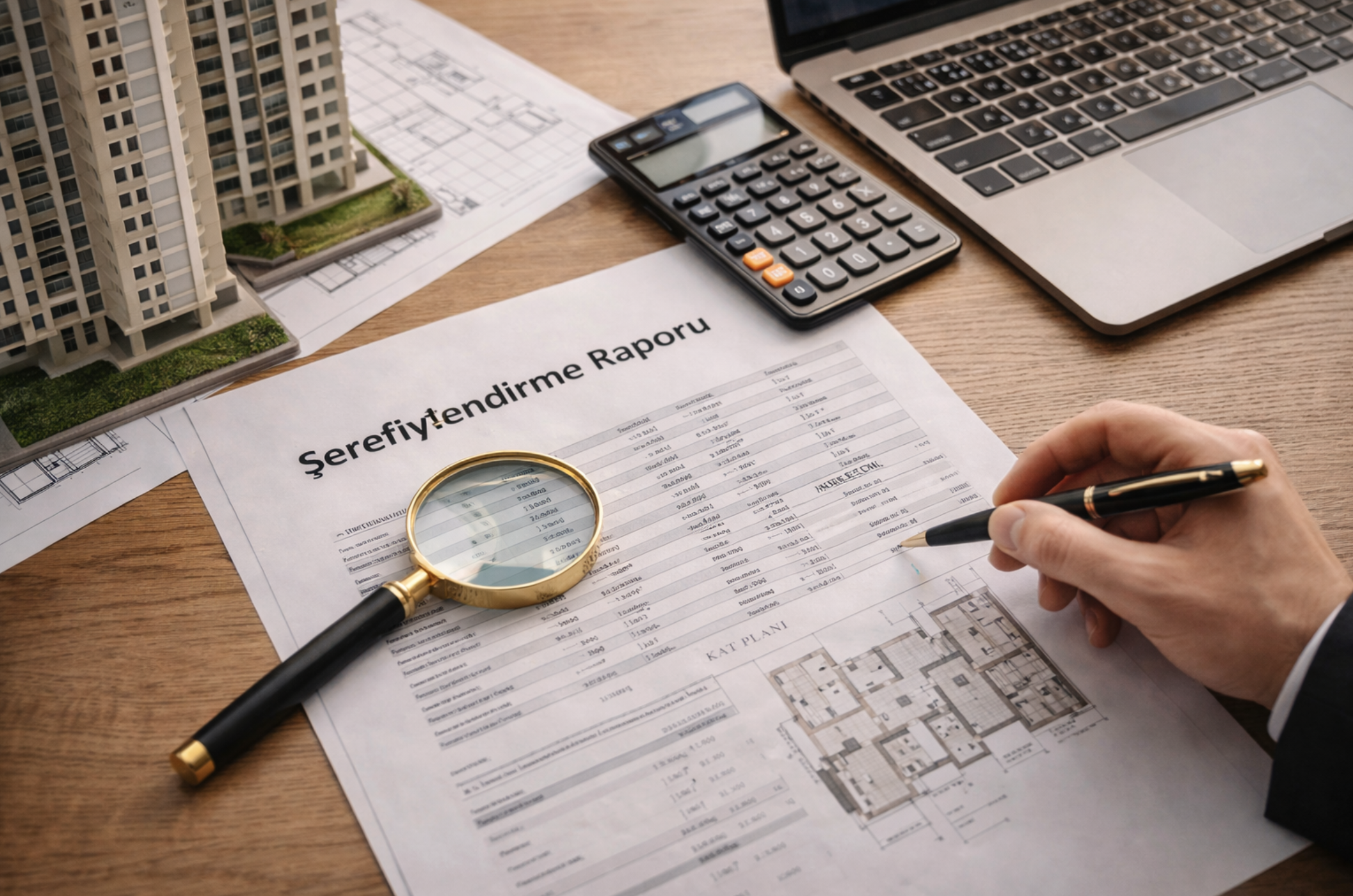
Many urban transformation projects in Turkey stop for years because of lawsuits filed by a minority of owners claiming “unfair distribution.” If you have a scientific valuation report based on mathematical equations and approved by a licensed appraiser, the legal chance of these lawsuits stopping construction is almost zero. Courts look for objective data, not subjective complaints.
The Fiza Global Manifesto: We Build the System, We Don’t Just Watch
Let’s skip the small talk and focus on building value. No square meter of your property is too small to be left to chance. At Fiza Global, we don’t just demolish and rebuild; we use CEO-level intelligence to reconstruct fair distribution and property rights from the ground up.
Before you sit down with a developer, get a mathematical “X-ray” of your project to block unfair value transfers. Check our Urban Transformation and Project Management page to see how we build a flawless valuation setup, or reach out to our strategy team directly. Let’s build new beginnings together!
Frequently Asked Questions (FAQ)
1. Is a premium value report a legal requirement?
While it isn’t a strict “line-by-line” requirement in Law No. 6306, Supreme Court rulings suggest that a professionally prepared table is a legal necessity to prove “fair distribution” among owners.
2. How are value differences (equalization payments) handled?
If a landowner gets a unit that is more valuable than their original land share, they pay the difference to the other owners or the developer in cash. If they get a less valuable unit, they have the right to collect that difference in cash.
3. Are ground-floor shops more valuable than apartments? Usually, yes. Commercial spaces have higher rental multipliers and price-per-square-meter values. Because of pedestrian traffic, vehicle access, and “signage value,” they typically have a much higher premium score than residential units on upper floors.
Author’s Note:
Prepared by the Fiza Global Strategy Team, based on 10 years of real estate development, 220,000 m² of project management, and a vision of “Success Engineering.”
[/vc_column_text][/vc_column][/vc_row]
-
- The Floor and Height Multiplier:
Real estate value generally increases as you go up. The noise and security disadvantages of a ground floor versus the isolation risks of a top floor must be calculated. Middle and upper floors are usually assigned positive (+) points. - Orientation, View, and Light Analysis:
The warmth and light of a south-facing unit, or a view of the sea, forest, or main street, must be measured precisely. The value difference between a dark north-facing unit and a south-facing one on the same floor can range from 15% to 30%. - Architectural Usability and Ergonomics:
It’s not just about gross square meters. The net-to-gross ratio, the angle of natural light in the bedrooms, ceiling heights, and balcony or terrace rights are technical factors that directly impact the premium score. - CMB-Licensed Independent Valuation:
You cannot leave this calculation to the developer’s architect or the apartment manager. This table must be officially prepared by independent real estate appraisers licensed by the Capital Markets Board (SPK/CMB) according to international standards. - Legal Integration into the Contract:
The premium value report must be on the table before any “Building Common Decision Protocol” or “Construction Agreement in Exchange for Land Share” is signed. It should be an “Inseparable Annex” of the contract and notarized accordingly.
- The Floor and Height Multiplier:
Preventing Lawsuits Before They Start
Many urban transformation projects in Turkey stop for years because of lawsuits filed by a minority of owners claiming “unfair distribution.” If you have a scientific valuation report based on mathematical equations and approved by a licensed appraiser, the legal chance of these lawsuits stopping construction is almost zero. Courts look for objective data, not subjective complaints.
The Fiza Global Manifesto: We Build the System, We Don’t Just Watch
Let’s skip the small talk and focus on building value. No square meter of your property is too small to be left to chance. At Fiza Global, we don’t just demolish and rebuild; we use CEO-level intelligence to reconstruct fair distribution and property rights from the ground up.
Before you sit down with a developer, get a mathematical “X-ray” of your project to block unfair value transfers. Check our Urban Transformation and Project Management page to see how we build a flawless valuation setup, or reach out to our strategy team directly. Let’s build new beginnings together!
Frequently Asked Questions (FAQ)
1. Is a premium value report a legal requirement?
While it isn’t a strict “line-by-line” requirement in Law No. 6306, Supreme Court rulings suggest that a professionally prepared table is a legal necessity to prove “fair distribution” among owners.
2. How are value differences (equalization payments) handled?
If a landowner gets a unit that is more valuable than their original land share, they pay the difference to the other owners or the developer in cash. If they get a less valuable unit, they have the right to collect that difference in cash.
3. Are ground-floor shops more valuable than apartments? Usually, yes. Commercial spaces have higher rental multipliers and price-per-square-meter values. Because of pedestrian traffic, vehicle access, and “signage value,” they typically have a much higher premium score than residential units on upper floors.
Author’s Note:
Prepared by the Fiza Global Strategy Team, based on 10 years of real estate development, 220,000 m² of project management, and a vision of “Success Engineering.”
[/vc_column_text][/vc_column][/vc_row]
To create a valuation table that stands up in court and maximizes your property value, these five analytical formulas must be applied strictly:
-
- The Floor and Height Multiplier:
Real estate value generally increases as you go up. The noise and security disadvantages of a ground floor versus the isolation risks of a top floor must be calculated. Middle and upper floors are usually assigned positive (+) points. - Orientation, View, and Light Analysis:
The warmth and light of a south-facing unit, or a view of the sea, forest, or main street, must be measured precisely. The value difference between a dark north-facing unit and a south-facing one on the same floor can range from 15% to 30%. - Architectural Usability and Ergonomics:
It’s not just about gross square meters. The net-to-gross ratio, the angle of natural light in the bedrooms, ceiling heights, and balcony or terrace rights are technical factors that directly impact the premium score. - CMB-Licensed Independent Valuation:
You cannot leave this calculation to the developer’s architect or the apartment manager. This table must be officially prepared by independent real estate appraisers licensed by the Capital Markets Board (SPK/CMB) according to international standards. - Legal Integration into the Contract:
The premium value report must be on the table before any “Building Common Decision Protocol” or “Construction Agreement in Exchange for Land Share” is signed. It should be an “Inseparable Annex” of the contract and notarized accordingly.
- The Floor and Height Multiplier:
Preventing Lawsuits Before They Start
Many urban transformation projects in Turkey stop for years because of lawsuits filed by a minority of owners claiming “unfair distribution.” If you have a scientific valuation report based on mathematical equations and approved by a licensed appraiser, the legal chance of these lawsuits stopping construction is almost zero. Courts look for objective data, not subjective complaints.
The Fiza Global Manifesto: We Build the System, We Don’t Just Watch
Let’s skip the small talk and focus on building value. No square meter of your property is too small to be left to chance. At Fiza Global, we don’t just demolish and rebuild; we use CEO-level intelligence to reconstruct fair distribution and property rights from the ground up.
Before you sit down with a developer, get a mathematical “X-ray” of your project to block unfair value transfers. Check our Urban Transformation and Project Management page to see how we build a flawless valuation setup, or reach out to our strategy team directly. Let’s build new beginnings together!
Frequently Asked Questions (FAQ)
1. Is a premium value report a legal requirement?
While it isn’t a strict “line-by-line” requirement in Law No. 6306, Supreme Court rulings suggest that a professionally prepared table is a legal necessity to prove “fair distribution” among owners.
2. How are value differences (equalization payments) handled?
If a landowner gets a unit that is more valuable than their original land share, they pay the difference to the other owners or the developer in cash. If they get a less valuable unit, they have the right to collect that difference in cash.
3. Are ground-floor shops more valuable than apartments? Usually, yes. Commercial spaces have higher rental multipliers and price-per-square-meter values. Because of pedestrian traffic, vehicle access, and “signage value,” they typically have a much higher premium score than residential units on upper floors.
Author’s Note:
Prepared by the Fiza Global Strategy Team, based on 10 years of real estate development, 220,000 m² of project management, and a vision of “Success Engineering.”
[/vc_column_text][/vc_column][/vc_row]
To create a valuation table that stands up in court and maximizes your property value, these five analytical formulas must be applied strictly:
-
- The Floor and Height Multiplier:
Real estate value generally increases as you go up. The noise and security disadvantages of a ground floor versus the isolation risks of a top floor must be calculated. Middle and upper floors are usually assigned positive (+) points. - Orientation, View, and Light Analysis:
The warmth and light of a south-facing unit, or a view of the sea, forest, or main street, must be measured precisely. The value difference between a dark north-facing unit and a south-facing one on the same floor can range from 15% to 30%. - Architectural Usability and Ergonomics:
It’s not just about gross square meters. The net-to-gross ratio, the angle of natural light in the bedrooms, ceiling heights, and balcony or terrace rights are technical factors that directly impact the premium score. - CMB-Licensed Independent Valuation:
You cannot leave this calculation to the developer’s architect or the apartment manager. This table must be officially prepared by independent real estate appraisers licensed by the Capital Markets Board (SPK/CMB) according to international standards. - Legal Integration into the Contract:
The premium value report must be on the table before any “Building Common Decision Protocol” or “Construction Agreement in Exchange for Land Share” is signed. It should be an “Inseparable Annex” of the contract and notarized accordingly.
- The Floor and Height Multiplier:
Preventing Lawsuits Before They Start
Many urban transformation projects in Turkey stop for years because of lawsuits filed by a minority of owners claiming “unfair distribution.” If you have a scientific valuation report based on mathematical equations and approved by a licensed appraiser, the legal chance of these lawsuits stopping construction is almost zero. Courts look for objective data, not subjective complaints.
The Fiza Global Manifesto: We Build the System, We Don’t Just Watch
Let’s skip the small talk and focus on building value. No square meter of your property is too small to be left to chance. At Fiza Global, we don’t just demolish and rebuild; we use CEO-level intelligence to reconstruct fair distribution and property rights from the ground up.
Before you sit down with a developer, get a mathematical “X-ray” of your project to block unfair value transfers. Check our Urban Transformation and Project Management page to see how we build a flawless valuation setup, or reach out to our strategy team directly. Let’s build new beginnings together!
Frequently Asked Questions (FAQ)
1. Is a premium value report a legal requirement?
While it isn’t a strict “line-by-line” requirement in Law No. 6306, Supreme Court rulings suggest that a professionally prepared table is a legal necessity to prove “fair distribution” among owners.
2. How are value differences (equalization payments) handled?
If a landowner gets a unit that is more valuable than their original land share, they pay the difference to the other owners or the developer in cash. If they get a less valuable unit, they have the right to collect that difference in cash.
3. Are ground-floor shops more valuable than apartments? Usually, yes. Commercial spaces have higher rental multipliers and price-per-square-meter values. Because of pedestrian traffic, vehicle access, and “signage value,” they typically have a much higher premium score than residential units on upper floors.
Author’s Note:
Prepared by the Fiza Global Strategy Team, based on 10 years of real estate development, 220,000 m² of project management, and a vision of “Success Engineering.”
[/vc_column_text][/vc_column][/vc_row]
When an old building is demolished and a new project is designed, the nature of the independent units (apartments, shops, or offices) changes completely. In traditional “flat-for-land” deals, everyone wants their old floor and view back. But in new architectural designs, that isn’t always physically possible.
A proper premium value report takes emotion out of the equation and brings in pure mathematics. Every single unit in the project is scored based on dozens of different criteria. This “Goodwill Score Table” ensures that land owners get the fair market value they deserve. Without this analysis, there is a high risk that the developer will keep the most valuable units for their own sales portfolio while leaving the “dead zones” of the project to the original owners.
5 Strategic Formulas for a Flawless Appraisal
To create a valuation table that stands up in court and maximizes your property value, these five analytical formulas must be applied strictly:
-
- The Floor and Height Multiplier:
Real estate value generally increases as you go up. The noise and security disadvantages of a ground floor versus the isolation risks of a top floor must be calculated. Middle and upper floors are usually assigned positive (+) points. - Orientation, View, and Light Analysis:
The warmth and light of a south-facing unit, or a view of the sea, forest, or main street, must be measured precisely. The value difference between a dark north-facing unit and a south-facing one on the same floor can range from 15% to 30%. - Architectural Usability and Ergonomics:
It’s not just about gross square meters. The net-to-gross ratio, the angle of natural light in the bedrooms, ceiling heights, and balcony or terrace rights are technical factors that directly impact the premium score. - CMB-Licensed Independent Valuation:
You cannot leave this calculation to the developer’s architect or the apartment manager. This table must be officially prepared by independent real estate appraisers licensed by the Capital Markets Board (SPK/CMB) according to international standards. - Legal Integration into the Contract:
The premium value report must be on the table before any “Building Common Decision Protocol” or “Construction Agreement in Exchange for Land Share” is signed. It should be an “Inseparable Annex” of the contract and notarized accordingly.
- The Floor and Height Multiplier:
Preventing Lawsuits Before They Start
Many urban transformation projects in Turkey stop for years because of lawsuits filed by a minority of owners claiming “unfair distribution.” If you have a scientific valuation report based on mathematical equations and approved by a licensed appraiser, the legal chance of these lawsuits stopping construction is almost zero. Courts look for objective data, not subjective complaints.
The Fiza Global Manifesto: We Build the System, We Don’t Just Watch
Let’s skip the small talk and focus on building value. No square meter of your property is too small to be left to chance. At Fiza Global, we don’t just demolish and rebuild; we use CEO-level intelligence to reconstruct fair distribution and property rights from the ground up.
Before you sit down with a developer, get a mathematical “X-ray” of your project to block unfair value transfers. Check our Urban Transformation and Project Management page to see how we build a flawless valuation setup, or reach out to our strategy team directly. Let’s build new beginnings together!
Frequently Asked Questions (FAQ)
1. Is a premium value report a legal requirement?
While it isn’t a strict “line-by-line” requirement in Law No. 6306, Supreme Court rulings suggest that a professionally prepared table is a legal necessity to prove “fair distribution” among owners.
2. How are value differences (equalization payments) handled?
If a landowner gets a unit that is more valuable than their original land share, they pay the difference to the other owners or the developer in cash. If they get a less valuable unit, they have the right to collect that difference in cash.
3. Are ground-floor shops more valuable than apartments? Usually, yes. Commercial spaces have higher rental multipliers and price-per-square-meter values. Because of pedestrian traffic, vehicle access, and “signage value,” they typically have a much higher premium score than residential units on upper floors.
Author’s Note:
Prepared by the Fiza Global Strategy Team, based on 10 years of real estate development, 220,000 m² of project management, and a vision of “Success Engineering.”
[/vc_column_text][/vc_column][/vc_row]
-
- Why a Professional Premium Value Report Is Non-Negotiable
- 5 Strategic Formulas for a Flawless Appraisal
- Preventing Lawsuits Before They Start
- The Fiza Global Manifesto: We Build the System, We Don’t Just Watch
- Frequently Asked Questions (FAQ)
Why a Professional Premium Value Report Is Non-Negotiable
When an old building is demolished and a new project is designed, the nature of the independent units (apartments, shops, or offices) changes completely. In traditional “flat-for-land” deals, everyone wants their old floor and view back. But in new architectural designs, that isn’t always physically possible.
A proper premium value report takes emotion out of the equation and brings in pure mathematics. Every single unit in the project is scored based on dozens of different criteria. This “Goodwill Score Table” ensures that land owners get the fair market value they deserve. Without this analysis, there is a high risk that the developer will keep the most valuable units for their own sales portfolio while leaving the “dead zones” of the project to the original owners.
5 Strategic Formulas for a Flawless Appraisal
To create a valuation table that stands up in court and maximizes your property value, these five analytical formulas must be applied strictly:
-
- The Floor and Height Multiplier:
Real estate value generally increases as you go up. The noise and security disadvantages of a ground floor versus the isolation risks of a top floor must be calculated. Middle and upper floors are usually assigned positive (+) points. - Orientation, View, and Light Analysis:
The warmth and light of a south-facing unit, or a view of the sea, forest, or main street, must be measured precisely. The value difference between a dark north-facing unit and a south-facing one on the same floor can range from 15% to 30%. - Architectural Usability and Ergonomics:
It’s not just about gross square meters. The net-to-gross ratio, the angle of natural light in the bedrooms, ceiling heights, and balcony or terrace rights are technical factors that directly impact the premium score. - CMB-Licensed Independent Valuation:
You cannot leave this calculation to the developer’s architect or the apartment manager. This table must be officially prepared by independent real estate appraisers licensed by the Capital Markets Board (SPK/CMB) according to international standards. - Legal Integration into the Contract:
The premium value report must be on the table before any “Building Common Decision Protocol” or “Construction Agreement in Exchange for Land Share” is signed. It should be an “Inseparable Annex” of the contract and notarized accordingly.
- The Floor and Height Multiplier:
Preventing Lawsuits Before They Start
Many urban transformation projects in Turkey stop for years because of lawsuits filed by a minority of owners claiming “unfair distribution.” If you have a scientific valuation report based on mathematical equations and approved by a licensed appraiser, the legal chance of these lawsuits stopping construction is almost zero. Courts look for objective data, not subjective complaints.
The Fiza Global Manifesto: We Build the System, We Don’t Just Watch
Let’s skip the small talk and focus on building value. No square meter of your property is too small to be left to chance. At Fiza Global, we don’t just demolish and rebuild; we use CEO-level intelligence to reconstruct fair distribution and property rights from the ground up.
Before you sit down with a developer, get a mathematical “X-ray” of your project to block unfair value transfers. Check our Urban Transformation and Project Management page to see how we build a flawless valuation setup, or reach out to our strategy team directly. Let’s build new beginnings together!
Frequently Asked Questions (FAQ)
1. Is a premium value report a legal requirement?
While it isn’t a strict “line-by-line” requirement in Law No. 6306, Supreme Court rulings suggest that a professionally prepared table is a legal necessity to prove “fair distribution” among owners.
2. How are value differences (equalization payments) handled?
If a landowner gets a unit that is more valuable than their original land share, they pay the difference to the other owners or the developer in cash. If they get a less valuable unit, they have the right to collect that difference in cash.
3. Are ground-floor shops more valuable than apartments? Usually, yes. Commercial spaces have higher rental multipliers and price-per-square-meter values. Because of pedestrian traffic, vehicle access, and “signage value,” they typically have a much higher premium score than residential units on upper floors.
Author’s Note:
Prepared by the Fiza Global Strategy Team, based on 10 years of real estate development, 220,000 m² of project management, and a vision of “Success Engineering.”
[/vc_column_text][/vc_column][/vc_row]
-
- Why a Professional Premium Value Report Is Non-Negotiable
- 5 Strategic Formulas for a Flawless Appraisal
- Preventing Lawsuits Before They Start
- The Fiza Global Manifesto: We Build the System, We Don’t Just Watch
- Frequently Asked Questions (FAQ)
Why a Professional Premium Value Report Is Non-Negotiable
When an old building is demolished and a new project is designed, the nature of the independent units (apartments, shops, or offices) changes completely. In traditional “flat-for-land” deals, everyone wants their old floor and view back. But in new architectural designs, that isn’t always physically possible.
A proper premium value report takes emotion out of the equation and brings in pure mathematics. Every single unit in the project is scored based on dozens of different criteria. This “Goodwill Score Table” ensures that land owners get the fair market value they deserve. Without this analysis, there is a high risk that the developer will keep the most valuable units for their own sales portfolio while leaving the “dead zones” of the project to the original owners.
5 Strategic Formulas for a Flawless Appraisal
To create a valuation table that stands up in court and maximizes your property value, these five analytical formulas must be applied strictly:
-
- The Floor and Height Multiplier:
Real estate value generally increases as you go up. The noise and security disadvantages of a ground floor versus the isolation risks of a top floor must be calculated. Middle and upper floors are usually assigned positive (+) points. - Orientation, View, and Light Analysis:
The warmth and light of a south-facing unit, or a view of the sea, forest, or main street, must be measured precisely. The value difference between a dark north-facing unit and a south-facing one on the same floor can range from 15% to 30%. - Architectural Usability and Ergonomics:
It’s not just about gross square meters. The net-to-gross ratio, the angle of natural light in the bedrooms, ceiling heights, and balcony or terrace rights are technical factors that directly impact the premium score. - CMB-Licensed Independent Valuation:
You cannot leave this calculation to the developer’s architect or the apartment manager. This table must be officially prepared by independent real estate appraisers licensed by the Capital Markets Board (SPK/CMB) according to international standards. - Legal Integration into the Contract:
The premium value report must be on the table before any “Building Common Decision Protocol” or “Construction Agreement in Exchange for Land Share” is signed. It should be an “Inseparable Annex” of the contract and notarized accordingly.
- The Floor and Height Multiplier:
Preventing Lawsuits Before They Start
Many urban transformation projects in Turkey stop for years because of lawsuits filed by a minority of owners claiming “unfair distribution.” If you have a scientific valuation report based on mathematical equations and approved by a licensed appraiser, the legal chance of these lawsuits stopping construction is almost zero. Courts look for objective data, not subjective complaints.
The Fiza Global Manifesto: We Build the System, We Don’t Just Watch
Let’s skip the small talk and focus on building value. No square meter of your property is too small to be left to chance. At Fiza Global, we don’t just demolish and rebuild; we use CEO-level intelligence to reconstruct fair distribution and property rights from the ground up.
Before you sit down with a developer, get a mathematical “X-ray” of your project to block unfair value transfers. Check our Urban Transformation and Project Management page to see how we build a flawless valuation setup, or reach out to our strategy team directly. Let’s build new beginnings together!
Frequently Asked Questions (FAQ)
1. Is a premium value report a legal requirement?
While it isn’t a strict “line-by-line” requirement in Law No. 6306, Supreme Court rulings suggest that a professionally prepared table is a legal necessity to prove “fair distribution” among owners.
2. How are value differences (equalization payments) handled?
If a landowner gets a unit that is more valuable than their original land share, they pay the difference to the other owners or the developer in cash. If they get a less valuable unit, they have the right to collect that difference in cash.
3. Are ground-floor shops more valuable than apartments? Usually, yes. Commercial spaces have higher rental multipliers and price-per-square-meter values. Because of pedestrian traffic, vehicle access, and “signage value,” they typically have a much higher premium score than residential units on upper floors.
Author’s Note:
Prepared by the Fiza Global Strategy Team, based on 10 years of real estate development, 220,000 m² of project management, and a vision of “Success Engineering.”
[/vc_column_text][/vc_column][/vc_row]
The only way to turn this inequality into financial and legal justice is through a “Premium Value Report” (known as Şerefiyelendirme in Turkey). At Fiza Global, with 10 years in the field and 220,000 m² of project management behind us, we see one thing clearly: signing a contract without a proper value calculation is essentially handing over your wealth to someone else for free. You shouldn’t leave the value of your property to luck or a developer’s mood. You need strategic valuation engineering.
Table of Contents
-
- Why a Professional Premium Value Report Is Non-Negotiable
- 5 Strategic Formulas for a Flawless Appraisal
- Preventing Lawsuits Before They Start
- The Fiza Global Manifesto: We Build the System, We Don’t Just Watch
- Frequently Asked Questions (FAQ)
Why a Professional Premium Value Report Is Non-Negotiable
When an old building is demolished and a new project is designed, the nature of the independent units (apartments, shops, or offices) changes completely. In traditional “flat-for-land” deals, everyone wants their old floor and view back. But in new architectural designs, that isn’t always physically possible.
A proper premium value report takes emotion out of the equation and brings in pure mathematics. Every single unit in the project is scored based on dozens of different criteria. This “Goodwill Score Table” ensures that land owners get the fair market value they deserve. Without this analysis, there is a high risk that the developer will keep the most valuable units for their own sales portfolio while leaving the “dead zones” of the project to the original owners.
5 Strategic Formulas for a Flawless Appraisal
To create a valuation table that stands up in court and maximizes your property value, these five analytical formulas must be applied strictly:
-
- The Floor and Height Multiplier:
Real estate value generally increases as you go up. The noise and security disadvantages of a ground floor versus the isolation risks of a top floor must be calculated. Middle and upper floors are usually assigned positive (+) points. - Orientation, View, and Light Analysis:
The warmth and light of a south-facing unit, or a view of the sea, forest, or main street, must be measured precisely. The value difference between a dark north-facing unit and a south-facing one on the same floor can range from 15% to 30%. - Architectural Usability and Ergonomics:
It’s not just about gross square meters. The net-to-gross ratio, the angle of natural light in the bedrooms, ceiling heights, and balcony or terrace rights are technical factors that directly impact the premium score. - CMB-Licensed Independent Valuation:
You cannot leave this calculation to the developer’s architect or the apartment manager. This table must be officially prepared by independent real estate appraisers licensed by the Capital Markets Board (SPK/CMB) according to international standards. - Legal Integration into the Contract:
The premium value report must be on the table before any “Building Common Decision Protocol” or “Construction Agreement in Exchange for Land Share” is signed. It should be an “Inseparable Annex” of the contract and notarized accordingly.
- The Floor and Height Multiplier:
Preventing Lawsuits Before They Start
Many urban transformation projects in Turkey stop for years because of lawsuits filed by a minority of owners claiming “unfair distribution.” If you have a scientific valuation report based on mathematical equations and approved by a licensed appraiser, the legal chance of these lawsuits stopping construction is almost zero. Courts look for objective data, not subjective complaints.
The Fiza Global Manifesto: We Build the System, We Don’t Just Watch
Let’s skip the small talk and focus on building value. No square meter of your property is too small to be left to chance. At Fiza Global, we don’t just demolish and rebuild; we use CEO-level intelligence to reconstruct fair distribution and property rights from the ground up.
Before you sit down with a developer, get a mathematical “X-ray” of your project to block unfair value transfers. Check our Urban Transformation and Project Management page to see how we build a flawless valuation setup, or reach out to our strategy team directly. Let’s build new beginnings together!
Frequently Asked Questions (FAQ)
1. Is a premium value report a legal requirement?
While it isn’t a strict “line-by-line” requirement in Law No. 6306, Supreme Court rulings suggest that a professionally prepared table is a legal necessity to prove “fair distribution” among owners.
2. How are value differences (equalization payments) handled?
If a landowner gets a unit that is more valuable than their original land share, they pay the difference to the other owners or the developer in cash. If they get a less valuable unit, they have the right to collect that difference in cash.
3. Are ground-floor shops more valuable than apartments? Usually, yes. Commercial spaces have higher rental multipliers and price-per-square-meter values. Because of pedestrian traffic, vehicle access, and “signage value,” they typically have a much higher premium score than residential units on upper floors.
Author’s Note:
Prepared by the Fiza Global Strategy Team, based on 10 years of real estate development, 220,000 m² of project management, and a vision of “Success Engineering.”
[/vc_column_text][/vc_column][/vc_row]
In urban transformation and real estate development, the biggest arguments aren’t usually about the size of an apartment. They are about where that apartment is actually located. Think about two neighbors with the same land share in the same building. If one ends up on the ground floor facing north and the other gets the 10th floor with a south-facing sea view, that is not a fair trade.
The only way to turn this inequality into financial and legal justice is through a “Premium Value Report” (known as Şerefiyelendirme in Turkey). At Fiza Global, with 10 years in the field and 220,000 m² of project management behind us, we see one thing clearly: signing a contract without a proper value calculation is essentially handing over your wealth to someone else for free. You shouldn’t leave the value of your property to luck or a developer’s mood. You need strategic valuation engineering.
Table of Contents
-
- Why a Professional Premium Value Report Is Non-Negotiable
- 5 Strategic Formulas for a Flawless Appraisal
- Preventing Lawsuits Before They Start
- The Fiza Global Manifesto: We Build the System, We Don’t Just Watch
- Frequently Asked Questions (FAQ)
Why a Professional Premium Value Report Is Non-Negotiable
When an old building is demolished and a new project is designed, the nature of the independent units (apartments, shops, or offices) changes completely. In traditional “flat-for-land” deals, everyone wants their old floor and view back. But in new architectural designs, that isn’t always physically possible.
A proper premium value report takes emotion out of the equation and brings in pure mathematics. Every single unit in the project is scored based on dozens of different criteria. This “Goodwill Score Table” ensures that land owners get the fair market value they deserve. Without this analysis, there is a high risk that the developer will keep the most valuable units for their own sales portfolio while leaving the “dead zones” of the project to the original owners.
5 Strategic Formulas for a Flawless Appraisal
To create a valuation table that stands up in court and maximizes your property value, these five analytical formulas must be applied strictly:
-
- The Floor and Height Multiplier:
Real estate value generally increases as you go up. The noise and security disadvantages of a ground floor versus the isolation risks of a top floor must be calculated. Middle and upper floors are usually assigned positive (+) points. - Orientation, View, and Light Analysis:
The warmth and light of a south-facing unit, or a view of the sea, forest, or main street, must be measured precisely. The value difference between a dark north-facing unit and a south-facing one on the same floor can range from 15% to 30%. - Architectural Usability and Ergonomics:
It’s not just about gross square meters. The net-to-gross ratio, the angle of natural light in the bedrooms, ceiling heights, and balcony or terrace rights are technical factors that directly impact the premium score. - CMB-Licensed Independent Valuation:
You cannot leave this calculation to the developer’s architect or the apartment manager. This table must be officially prepared by independent real estate appraisers licensed by the Capital Markets Board (SPK/CMB) according to international standards. - Legal Integration into the Contract:
The premium value report must be on the table before any “Building Common Decision Protocol” or “Construction Agreement in Exchange for Land Share” is signed. It should be an “Inseparable Annex” of the contract and notarized accordingly.
- The Floor and Height Multiplier:
Preventing Lawsuits Before They Start
Many urban transformation projects in Turkey stop for years because of lawsuits filed by a minority of owners claiming “unfair distribution.” If you have a scientific valuation report based on mathematical equations and approved by a licensed appraiser, the legal chance of these lawsuits stopping construction is almost zero. Courts look for objective data, not subjective complaints.
The Fiza Global Manifesto: We Build the System, We Don’t Just Watch
Let’s skip the small talk and focus on building value. No square meter of your property is too small to be left to chance. At Fiza Global, we don’t just demolish and rebuild; we use CEO-level intelligence to reconstruct fair distribution and property rights from the ground up.
Before you sit down with a developer, get a mathematical “X-ray” of your project to block unfair value transfers. Check our Urban Transformation and Project Management page to see how we build a flawless valuation setup, or reach out to our strategy team directly. Let’s build new beginnings together!
Frequently Asked Questions (FAQ)
1. Is a premium value report a legal requirement?
While it isn’t a strict “line-by-line” requirement in Law No. 6306, Supreme Court rulings suggest that a professionally prepared table is a legal necessity to prove “fair distribution” among owners.
2. How are value differences (equalization payments) handled?
If a landowner gets a unit that is more valuable than their original land share, they pay the difference to the other owners or the developer in cash. If they get a less valuable unit, they have the right to collect that difference in cash.
3. Are ground-floor shops more valuable than apartments? Usually, yes. Commercial spaces have higher rental multipliers and price-per-square-meter values. Because of pedestrian traffic, vehicle access, and “signage value,” they typically have a much higher premium score than residential units on upper floors.
Author’s Note:
Prepared by the Fiza Global Strategy Team, based on 10 years of real estate development, 220,000 m² of project management, and a vision of “Success Engineering.”